
Typing Territory Tactics
Opens in a play window — no download required.
Reviews
Typing Territory Tactics stands out by merging two distinct skills: fast typing and spatial strategy. The grid-based capture system is easy to understand but offers surprising depth as players learn to balance expansion with self-preservation. Multiplayer matches are tense and unpredictable, with each elimination shifting the board's balance. The lack of random elements ensures that skill determines the outcome. Short match length makes it ideal for quick sessions, while the strategic layer keeps it engaging for longer play. A refreshing take on competitive word games.
Description
Core Gameplay Loop
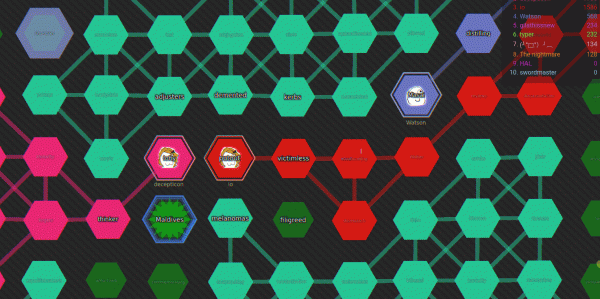
In Typing Territory Tactics, each match begins with players placed on a shared grid. The board is filled with word tiles, and the objective is to capture as many tiles as possible by typing the displayed words. Movement is controlled with arrow keys, allowing players to navigate toward unclaimed tiles or away from rivals. Every captured tile expands your color on the map and adds to your total score. The tension comes from knowing that an opponent can step onto your current tile, instantly ending your run. This forces constant awareness of both the board layout and the position of other players.
Strategic Depth Beneath Simple Controls
While the basic action is straightforward—move, type, capture—the strategic layer gives the game its lasting appeal. Players must decide whether to claim nearby tiles quickly or push into contested areas for larger gains. Leaving a path open for retreat is often wiser than capturing every adjacent tile. Watching the movement patterns of opponents helps predict where they might head next. A strong connected territory is harder for rivals to break into, while scattered tiles leave you vulnerable. Each match becomes a puzzle of resource management where your main resource is time and positioning.
Multiplayer Dynamics
The game supports multiple players in a single match, creating a lively and unpredictable environment. Since any player can eliminate another by stepping onto their tile, alliances are temporary and self-interest rules. The pace shifts as players are removed, leaving fewer competitors but more open space. Late-game matches often become tense standoffs where one wrong move ends your run. The chat or emote system (if available) adds a layer of social interaction, but the core experience remains focused on the competition between typing speed and tactical thinking.
Skill Development and Progression
New players will find the typing requirement challenging at first, but practice quickly improves both speed and accuracy. Over time, players learn to type common words faster and develop a mental map of the grid. Strategic skills also grow: recognizing when to push forward and when to fall back becomes second nature. The game does not rely on luck or random elements, so every victory feels earned. Regular play leads to noticeable improvement in both typing ability and strategic decision-making, making each session rewarding.
Match Structure and Accessibility
Matches are designed to be short, typically lasting a few minutes. This makes the game easy to pick up during a break or between tasks. The controls are minimal—only arrow keys and typing—so there is no steep learning curve for the interface. The visual design is clean and uncluttered, with tiles clearly labeled and player colors distinct. No violent or mature content appears, making it suitable for a wide audience. The combination of quick matches and deep strategy ensures that players can enjoy a few rounds or settle in for a longer session.


Comments
Sign in to leave a note
You must be logged in before posting a review or rating.
No account? Create one
No comments yet. Be the first to comment!