
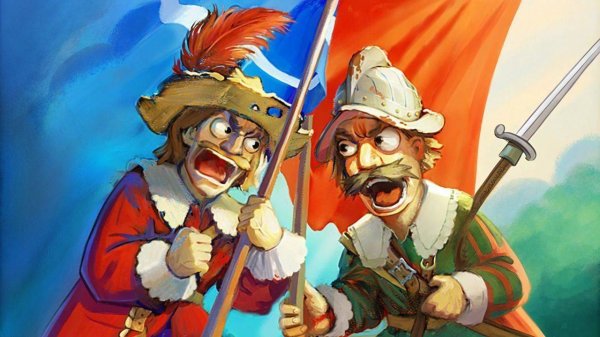
Commander's Company: Tactical 17th Century Battles
Opens in a play window — no download required.
Reviews
Commander's Company offers a satisfying blend of historical authenticity and accessible tactical gameplay. The unit interactions are well-balanced, and the terrain adds meaningful depth to each encounter. Progression feels rewarding without being grindy, and the straightforward controls let players focus on strategy. While the lack of a story campaign may disappoint some, the core loop of assembling a company and adapting to different battlefields provides plenty of replay value. It is a solid choice for anyone who enjoys thoughtful, turn-based or real-time tactical games.
Description
Commanding Your Forces
In this historical strategy game, players step into the role of a military leader responsible for a diverse group of soldiers. The core of the experience revolves around assembling a company before each encounter, selecting from units like pikemen, musketeers, and mounted reiters. Each unit type brings distinct strengths to the field, and understanding their interactions is essential for success. The command system is designed to be straightforward, allowing players to focus on strategic decisions rather than complex controls. Positioning troops to hold lines, deliver volleys at the right moment, or exploit gaps in the enemy formation becomes the primary challenge.
Unit Roles and Synergies
Pikemen serve as the backbone of any formation, providing a sturdy front line that can absorb charges and protect more vulnerable units. Musketeers offer ranged firepower, but require careful placement to maximize their effectiveness while staying safe from enemy advances. Mounted reiters provide mobility, able to strike weak points or pursue fleeing opponents. The interplay between these units creates a dynamic where players must constantly assess the battlefield and adjust their approach. Learning how each unit counters others is a gradual process that rewards experimentation.
Battlefield Tactics
Terrain plays a significant role in shaping engagements. Hills provide defensive advantages, forests can conceal movements, and open fields favor units with longer reach. Players must use these features to their benefit, positioning troops to control key areas and force enemies into unfavorable positions. Timing is equally important; ordering a volley too early or committing cavalry at the wrong moment can turn the tide. Each battle presents a new puzzle, encouraging players to think ahead and adapt on the fly.
Progression and Resource Management
As players advance, they earn resources that can be used to train new units, upgrade existing ones, or unlock additional capabilities. This system adds depth without overwhelming the player, allowing for steady growth and customization. Balancing the composition of the company becomes a strategic layer of its own, as different scenarios may call for more pikemen, additional musketeers, or a stronger cavalry presence. The progression feels natural, with each victory providing the means to tackle tougher challenges.
Visual and Atmospheric Design
The game presents detailed environments that evoke the 17th century, with rolling fields, fortified positions, and period-appropriate architecture. Visual cues help players quickly assess the battlefield, from unit formations to terrain features. The art style supports the historical theme without sacrificing clarity, ensuring that players can focus on strategy. Sound design complements the visuals, with musket volleys, marching footsteps, and ambient sounds that enhance immersion.








Comments
Sign in to leave a note
You must be logged in before posting a review or rating.
No account? Create one
No comments yet. Be the first to comment!